A Sky Full of Stars - The Historical Baseline
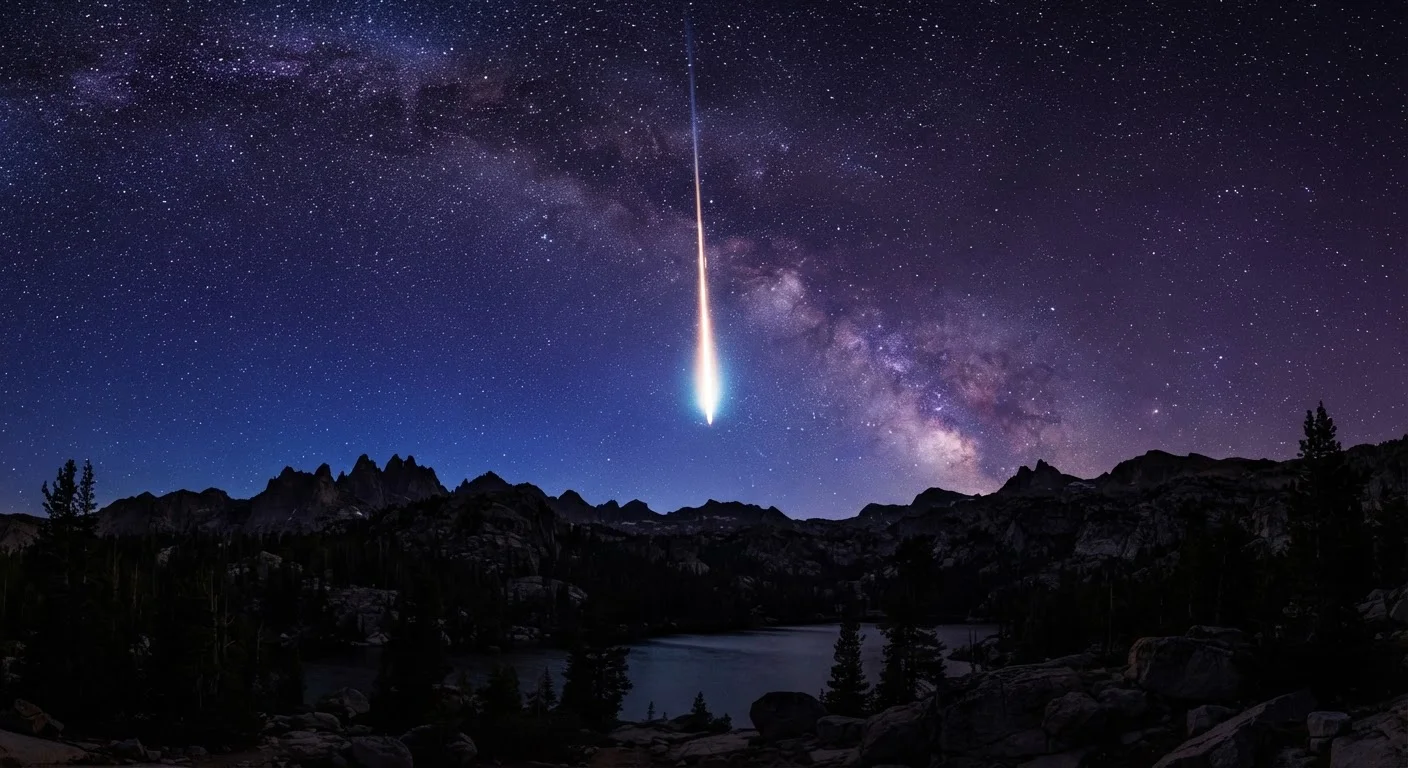
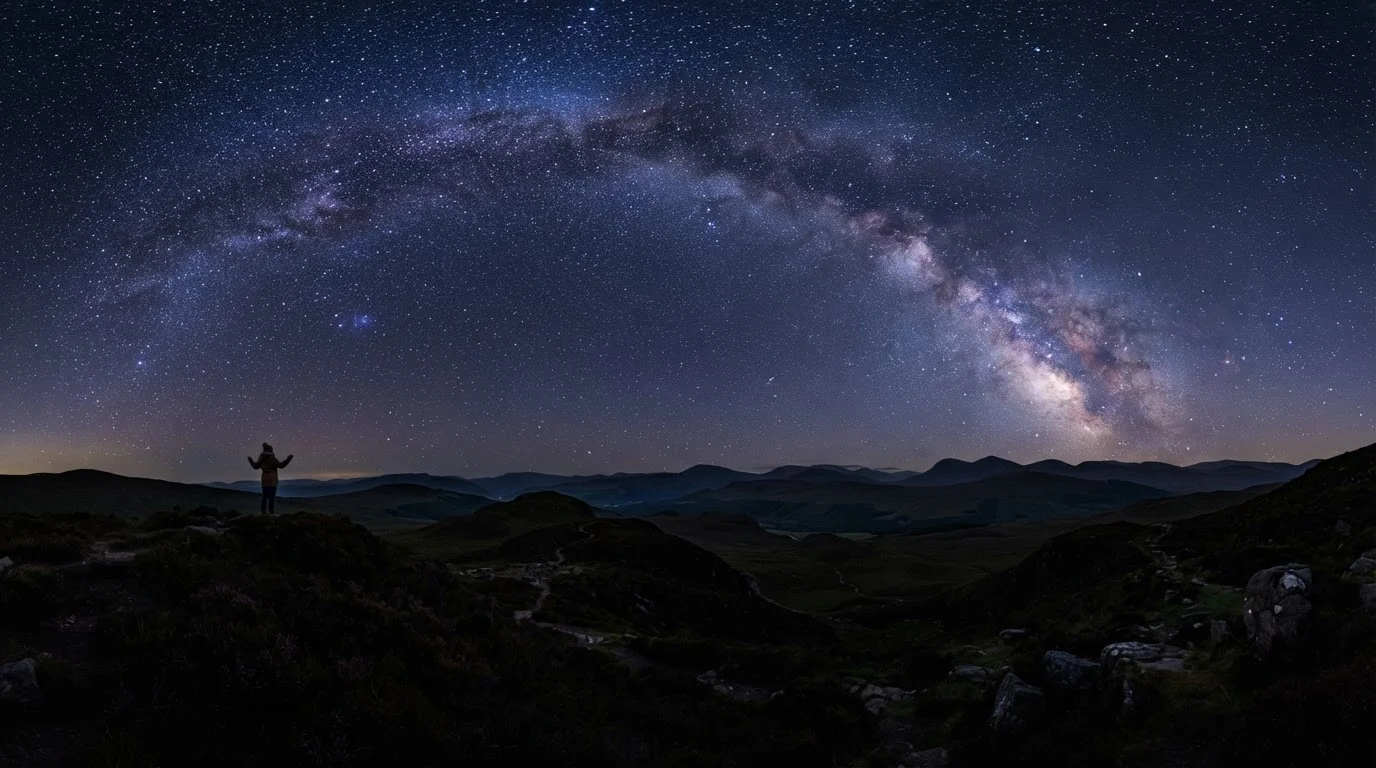
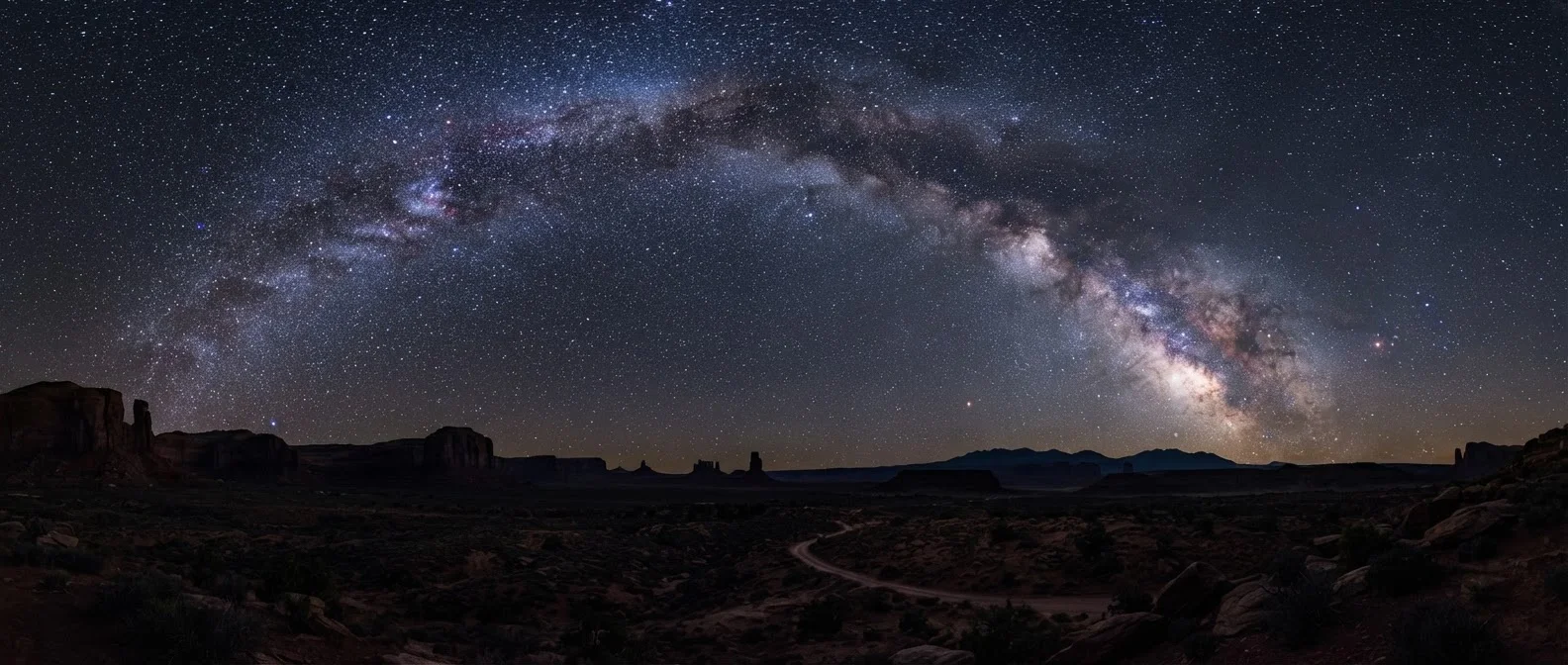
For the vast majority of human history, going outside after dark meant standing beneath a river of light. The Milky Way - our own galaxy seen edge-on - blazed overhead as a dense, textured band, visibly brighter in some regions and threaded with dark dust lanes. Planets cast shadows. The Andromeda Galaxy, 2.5 million light-years away, was a naked-eye object easily spotted on any clear night.
Ancient Egyptian, Mesopotamian, Greek, Maya, and Aboriginal Australian cultures built sophisticated astronomical systems from nothing more than careful, repeated observation of what they could see overhead. The precision of structures like Stonehenge and the Caracol observatory in Chichén Itzá reflects how deeply sky observation was woven into daily and ceremonial life. These achievements weren't possible because ancient people were exceptional - they were possible because the sky was consistently, brilliantly readable.
That baseline sky has now been fundamentally altered. A 2016 study published in Science Advances found that more than 80% of the world's population, and 99% of people in the United States and Europe, live under light-polluted skies. For most Americans today, the Milky Way is not an occasional sight - it is simply gone from lived experience.
What Artificial Light Has Hidden
The transformation happened quickly by historical standards. Gas lighting spread through European and American cities in the early 19th century. Electric arc lamps followed in the 1880s, and by the mid-20th century, the artificial glow over major cities had grown large enough to be seen from hundreds of miles away.
Sky glow - the dome of scattered light above populated areas - doesn't just dim the stars directly overhead. It spills outward into rural areas, gradually eroding dark sky quality across entire regions. Satellites and high-altitude aircraft now photograph continents where entire coastlines and river valleys are outlined in orange and white light, visible from orbit.
80%
Americans unable to see the Milky Way
According to a 2016 atlas of artificial night sky brightness published in Science Advances by Fabio Falchi and colleagues.
9.6%
Annual increase in sky brightness
A study published in Science (2023) found the number of visible stars has been decreasing at a rate consistent with roughly 9.6% annual sky brightening globally.
2,500+
Stars visible from a truly dark site
Under pristine dark-sky conditions, the unaided human eye can resolve thousands of individual stars - compared to fewer than 20 in a bright city center.
What specifically disappears? At the faintest end of naked-eye visibility, entire star clusters, nebulae, and the structural features of the Milky Way fade first. The Orion Nebula becomes a blur rather than a vivid smear. The Pleiades cluster shrinks from dozens of visible stars to six or seven. The gegenschein - a faint glow caused by sunlight reflecting off interplanetary dust - is entirely unknown to most living people, despite being a documented phenomenon for centuries.
Why This Loss Matters Beyond Astronomy
The disappearance of the natural night sky is more than an aesthetic loss. Research in ecology has documented that artificial light at night disrupts the behavior of insects, birds, sea turtles, and other species that navigate, feed, or reproduce based on natural light cycles. Migratory birds, in particular, are drawn off course by urban light and collide with illuminated buildings in large numbers annually.
For humans, there is a growing body of research examining the relationship between artificial light at night and disruption of circadian rhythms, though this remains an active area of study and readers should consult healthcare professionals regarding any personal health concerns.
There is also a cultural and psychological dimension. The night sky has functioned as a shared human reference - a source of orientation, wonder, and humility - for the entire span of our species' existence. Its removal from the daily experience of billions of people represents a quiet but profound shift in how humans relate to the larger universe. Astronomers and science communicators have increasingly argued that this constitutes a form of environmental and cultural impoverishment.
If you're curious about what you can still see, even from moderately dark locations, our complete beginner's guide to stargazing covers what to look for, when to go out, and how to read the night sky without any equipment.
“The universe is under no obligation to make sense to you. But when you can actually see it, it tends to inspire the kind of humility and wonder that changes how people think about themselves and their place in the cosmos.”
— Neil deGrasse Tyson, Astrophysicist and science communicator
What a Dark Sky Actually Looks Like Today
Certified dark sky sites - remote deserts, high-altitude plateaus, and protected wilderness areas - offer a window into the pre-industrial sky. Visitors to places like the darkest corners of the American Southwest or the Chilean Atacama consistently report that the experience is disorienting at first: the sky appears genuinely three-dimensional, the Milky Way casts a faint but perceptible shadow, and the sheer density of stars makes familiar constellations harder to trace because so many background stars are now visible between them.
This is what billions of human beings saw every cloudless night for tens of thousands of years. It shaped mythology, science, philosophy, and navigation. Recovering even a fraction of that view - through thoughtful lighting policy, dark-sky designations, and individual choices about outdoor lighting - begins with understanding what has been lost and why it still matters.