
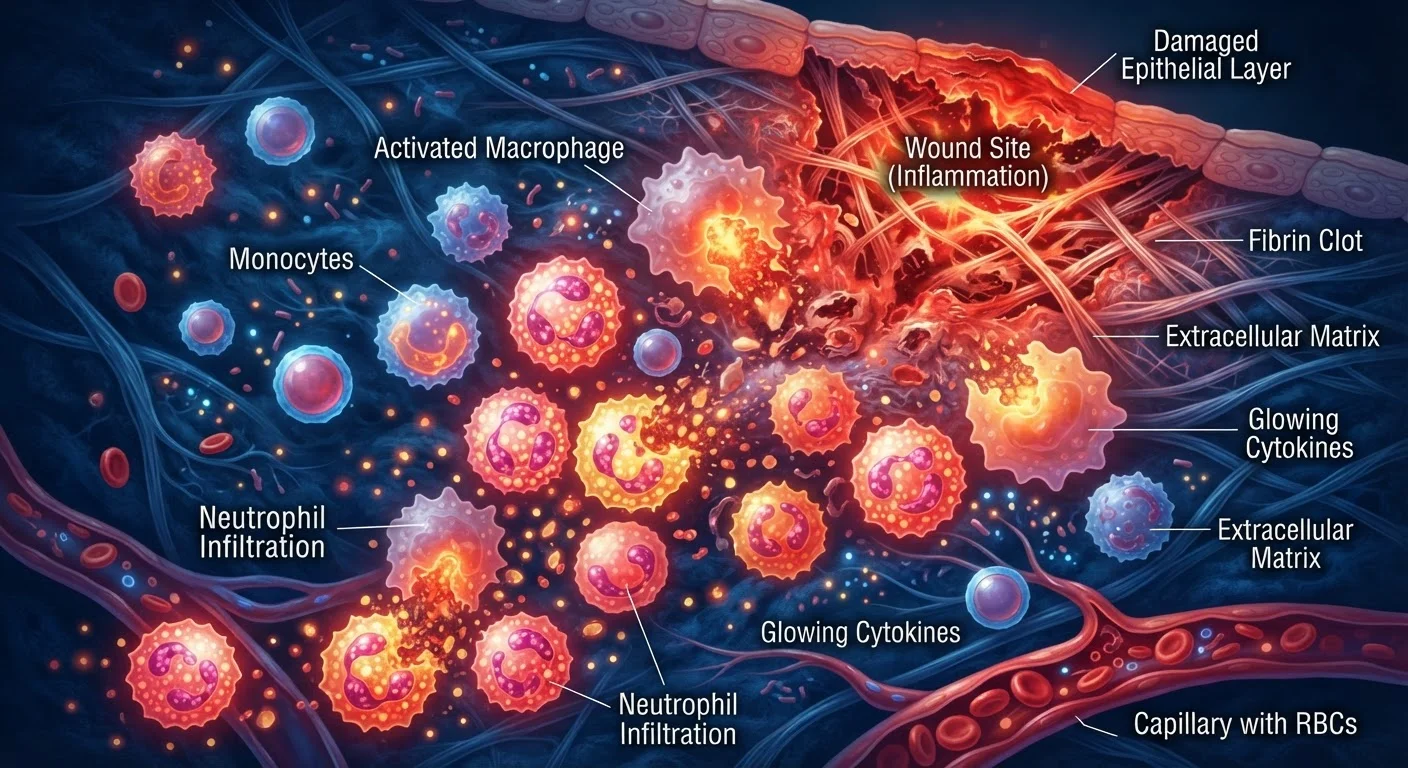
The Body's Emergency Response System
Think of inflammation as your body's internal emergency services. The moment tissue is damaged - by a cut, a bacterial invader, a sprained ankle - your immune system dispatches a rapid-response team. Blood vessels near the injury widen to increase flow. Immune cells flood the area. Chemical messengers called cytokines coordinate the attack, flagging damaged cells for removal and calling in reinforcements.
This is acute inflammation, and it is both normal and essential. The redness around a splinter, the swelling of a twisted knee, the fever that spikes during a flu - these are all signs that the immune system is doing exactly what it was designed to do. Within days, once the threat is neutralized, anti-inflammatory signals take over and the response winds down.
The biology here is precise and purposeful. Without it, minor infections could become life-threatening, wounds wouldn't heal, and the body would have no mechanism for clearing out dead or damaged cells.
“Inflammation is a double-edged sword. It is essential for the body to fight infection and repair injury, but when it is excessive or persists too long, it becomes a disease process in itself.”
— Charles Serhan, Director of the Center for Experimental Therapeutics and Reperfusion Injury, Brigham and Women's Hospital, Harvard Medical School
When the Switch Gets Stuck: Chronic Inflammation
Chronic inflammation occurs when the immune system remains activated long after the original trigger - or when it activates in the absence of a genuine threat. Instead of a short, targeted burst, the inflammatory response becomes a slow, persistent simmer that can last months or years.
This sustained state causes collateral damage. Immune cells that are meant to target pathogens begin to affect healthy tissue. Over time, this is believed to contribute to a wide range of serious conditions:
- Cardiovascular disease: Inflammation plays a role in the buildup of arterial plaques, increasing the risk of heart attack and stroke.
- Type 2 diabetes: Chronic inflammation can interfere with insulin signaling and glucose regulation.
- Rheumatoid arthritis: In this autoimmune condition, the immune system mistakenly attacks joint tissue.
- Inflammatory bowel disease: Conditions like Crohn's disease involve chronic immune activation in the digestive tract.
Researchers are also investigating links between persistent inflammation and depression, cognitive decline, and certain cancers - though causality in many of these associations is still being established.
~60%
Adults with at least one chronic inflammatory condition
Research published in public health literature estimates that chronic inflammatory diseases account for the majority of deaths globally and affect a large share of adults in developed nations.
2-3x
Elevated cardiovascular risk linked to high CRP
Studies including the Physicians' Health Study have found that elevated C-reactive protein levels are associated with a significantly higher risk of future heart attack and stroke.
7+ hours
Sleep duration associated with lower inflammatory markers
Meta-analyses of sleep and immunity research consistently show that adults sleeping fewer than six hours per night show measurably higher levels of pro-inflammatory cytokines.
What Drives Chronic Inflammation - and What Doesn't
Chronic inflammation rarely has a single cause. It tends to emerge from a combination of factors that keep the immune system in a state of low-level alert. Research points to several consistent contributors:
- Obesity: Fat tissue - particularly visceral fat around organs - is metabolically active and releases pro-inflammatory cytokines.
- Sleep disruption: Even short-term sleep loss has been shown to elevate inflammatory markers in otherwise healthy adults.
- Chronic psychological stress: Prolonged stress hormones can dysregulate immune responses, tipping the system toward inflammation.
- Diet patterns: Diets high in ultra-processed foods and refined sugars are associated with higher inflammatory markers in population studies.
- Smoking and air pollution: Both introduce irritants that provoke sustained immune activity in lung and vascular tissue.
It is equally important to understand what inflammation is not. It is not simply soreness after exercise - that temporary discomfort is part of a healthy acute response that drives muscle adaptation. And while anti-inflammatory supplements are heavily marketed, the evidence for most of them treating chronic inflammation is limited and mixed.
This article is for general health education and informational purposes only. It is not a substitute for professional medical advice, diagnosis, or treatment. If you have concerns about inflammation or related health conditions, consult a qualified healthcare professional.