
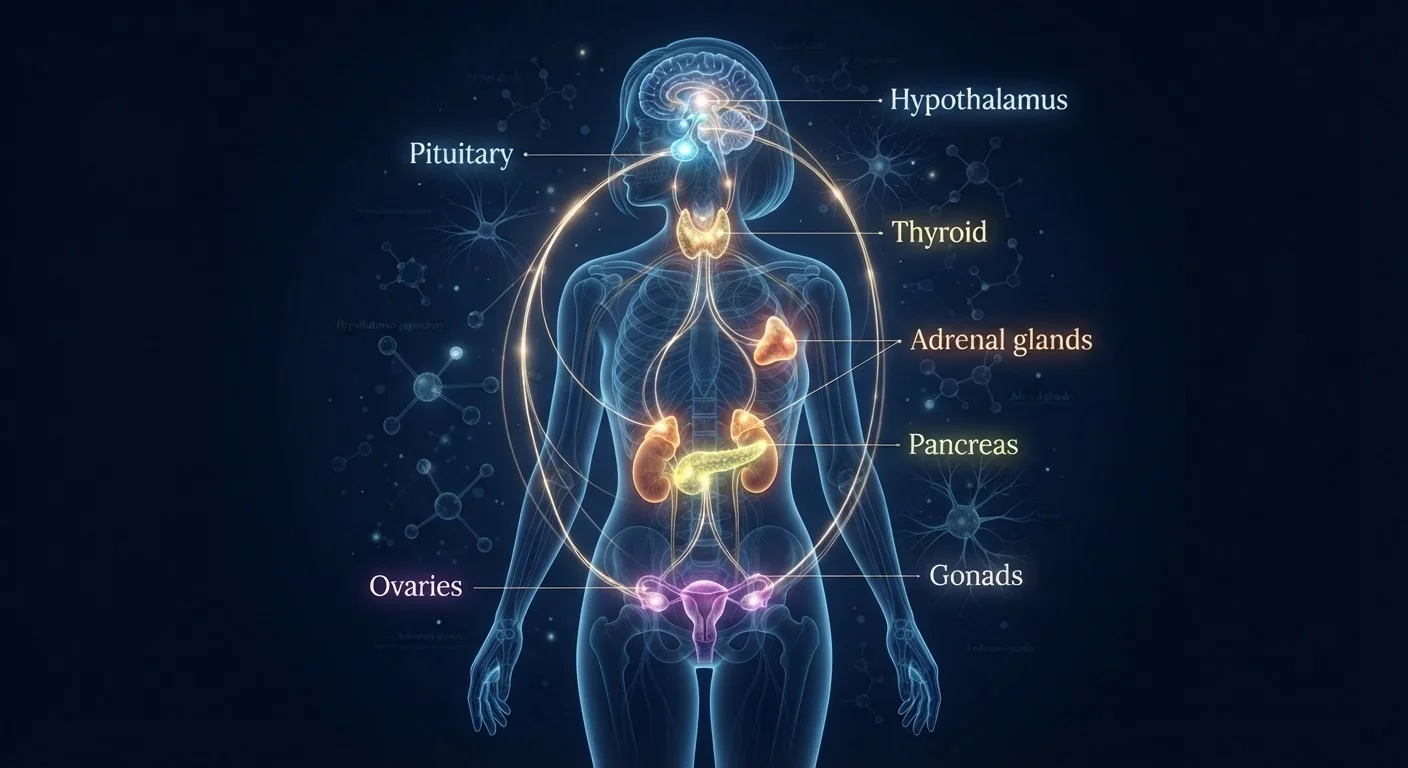
What the Endocrine System Actually Does
The endocrine system is the body's long-range communication network. While the nervous system fires rapid electrical signals measured in milliseconds, the endocrine system releases chemical messengers - called hormones - into the bloodstream, where they travel to distant organs and tissues to deliver instructions. The effects can unfold over minutes, hours, or even years.
These instructions cover an extraordinary range of functions: regulating how fast your heart beats, how quickly you burn calories, when you enter puberty, how well you sleep, and how your body responds to danger or infection. Without a functioning endocrine system, virtually none of the body's coordinated long-term processes could occur.
The word endocrine comes from the Greek roots for "within" and "to separate" - reflecting how these glands secrete hormones directly into the bloodstream rather than through ducts. That's the key distinction between endocrine glands (like the thyroid) and exocrine glands (like sweat or salivary glands), which deliver their products through dedicated channels.
The Major Glands and Their Roles
The endocrine system is not a single organ but a distributed network of glands located throughout the body. Each plays a distinct role.
- Hypothalamus: Often called the master regulator, this small brain region links the nervous system to the endocrine system by signaling the pituitary gland. It monitors the body's internal environment and issues chemical commands accordingly.
- Pituitary gland: About the size of a pea and nestled at the base of the brain, the pituitary is frequently described as the "master gland." It releases hormones that govern growth, reproduction, thyroid function, and the stress response - often by directing other glands.
- Thyroid gland: Located in the neck, the thyroid produces hormones (primarily T3 and T4) that set the metabolic rate of virtually every cell in the body. It also plays a key role in heart rate, temperature regulation, and brain development during fancy.
- Adrenal glands: Perched atop each kidney, these glands produce cortisol (the primary stress hormone), adrenaline (epinephrine), and aldosterone, which regulates blood pressure by controlling sodium and water balance.
- Pancreas: This dual-function organ produces digestive enzymes (exocrine) but also secretes insulin and glucagon (endocrine) - hormones that control blood sugar levels with remarkable precision.
- Gonads (ovaries and testes): These produce sex hormones - estrogen and progesterone in females, testosterone primarily in males - that drive reproductive development, fertility, and secondary sex characteristics.
- Pineal gland: A small gland deep in the brain that secretes melatonin, the hormone that helps regulate sleep-wake cycles in response to light and darkness.
When interpreting thyroid lab results, always look at TSH alongside free T3 and free T4 together - TSH alone can be misleading in cases of pituitary dysfunction or early-stage thyroid disease.
Endocrinologists consistently note that isolated TSH readings can fall within "normal" ranges while clinically significant thyroid abnormalities go undetected without the full picture.
Morning cortisol tests are far more informative than afternoon measurements - cortisol follows a strong diurnal rhythm, peaking within the first hour after waking and declining steadily through the day.
Because cortisol levels vary by as much as 50-70% across the day, the timing of a blood draw fundamentally changes what the result means clinically.
How Hormones Travel and Communicate
Once a hormone is secreted into the bloodstream, it circulates throughout the entire body - but only affects cells that carry the right receptor for that particular hormone. Think of it as a lock-and-key system: the hormone is the key, and only cells bearing the matching lock (receptor) will respond.
Receptors can sit on the outer surface of a cell membrane or reside inside the cell itself. Peptide hormones (like insulin) bind to surface receptors and trigger a cascade of internal signals without entering the cell. Steroid hormones (like cortisol and estrogen), being fat-soluble, pass directly through the cell membrane and bind to receptors inside the nucleus, where they can directly influence gene expression.
This distinction matters clinically. Steroid hormones can alter which genes are switched on or off, producing effects that persist long after hormone levels return to baseline - a reason why therapeutic steroids carry significant long-term consequences.
Feedback Loops: The Body's Self-Regulating System
The endocrine system maintains balance primarily through negative feedback loops - the same principle used in a household thermostat. When a hormone level rises too high, the system detects this and signals the relevant gland to slow production. When levels drop too low, production is stimulated again.
The hypothalamic-pituitary-thyroid (HPT) axis illustrates this elegantly. The hypothalamus releases thyrotropin-releasing hormone (TRH), which prompts the pituitary to release thyroid-stimulating hormone (TSH), which then tells the thyroid to produce T3 and T4. When circulating T3 and T4 reach adequate levels, they feed back to suppress both TRH and TSH, slowing their own production. The loop is self-correcting.
Positive feedback loops also exist but are far less common - reserved for situations where the body needs to amplify a signal rapidly toward a defined endpoint, such as the surge of oxytocin during childbirth that intensifies uterine contractions until delivery is complete.
When the Endocrine System Falls Out of Balance
Endocrine disorders arise when glands produce too much or too little of a hormone, when receptors fail to respond correctly, or when feedback mechanisms break down. These are among the most prevalent chronic conditions in the United States.
- Type 1 and Type 2 diabetes: Both involve impaired insulin function - either the pancreas produces little or no insulin (Type 1) or cells become resistant to its effects (Type 2), resulting in chronically elevated blood sugar.
- Hypothyroidism and hyperthyroidism: An underactive thyroid slows metabolism, causing fatigue, weight gain, and cold intolerance. An overactive thyroid accelerates it, leading to rapid heartbeat, weight loss, and anxiety.
- Cushing's syndrome: Excess cortisol - from a tumor or prolonged use of corticosteroid medications - causes weight gain around the midsection, high blood pressure, and skin changes.
- Polycystic ovary syndrome (PCOS): A common hormonal disorder in people with ovaries, involving elevated androgens and disrupted ovulation, often linked to insulin resistance.
Don't Self-Diagnose a Hormonal Imbalance
Many endocrine disorder symptoms - fatigue, mood changes, weight fluctuation - overlap significantly with other common conditions. Attempting to self-diagnose based on symptoms alone, or self-treating with hormone supplements purchased without medical oversight, carries real health risks. Accurate diagnosis requires blood tests interpreted by a qualified clinician familiar with your full medical history.
Endocrine disorders are highly treatable when properly diagnosed. If you notice persistent unexplained symptoms - unusual fatigue, significant unintentional weight changes, or mood shifts - consulting a healthcare provider is the appropriate first step.
This article is for general educational purposes only and is not a substitute for professional medical advice, diagnosis, or treatment. Always consult a qualified healthcare professional regarding any health concerns.
Supporting Endocrine Health: What the Science Says
While genetics and underlying conditions shape much of endocrine function, research consistently shows that several lifestyle factors measurably influence hormone levels and glandular health.
- Sleep: The majority of growth hormone secretion occurs during deep sleep. Chronic sleep deprivation has been linked to elevated cortisol, reduced insulin sensitivity, and disrupted leptin and ghrelin levels - hormones that regulate hunger and satiety.
- Physical activity: Regular moderate exercise improves insulin sensitivity and supports healthy cortisol rhythms. Resistance training, in particular, has well-documented effects on testosterone and growth hormone secretion.
- Nutrition: Adequate intake of iodine (essential for thyroid hormone synthesis), zinc (important for reproductive hormones), and vitamin D (which itself functions as a hormone precursor) supports normal endocrine function. Chronic caloric restriction or extreme dieting can suppress reproductive hormones as a protective response.
- Stress management: Prolonged psychological stress sustains elevated cortisol, which can suppress immune function, impair thyroid hormone conversion, and disrupt the reproductive axis over time.
- Environmental exposures: Certain industrial chemicals known as endocrine-disrupting compounds (EDCs) - including some plasticizers and pesticides - can mimic or interfere with hormone signaling. Regulatory agencies and ongoing research continue to assess population-level risks.