What Kombucha Actually Is
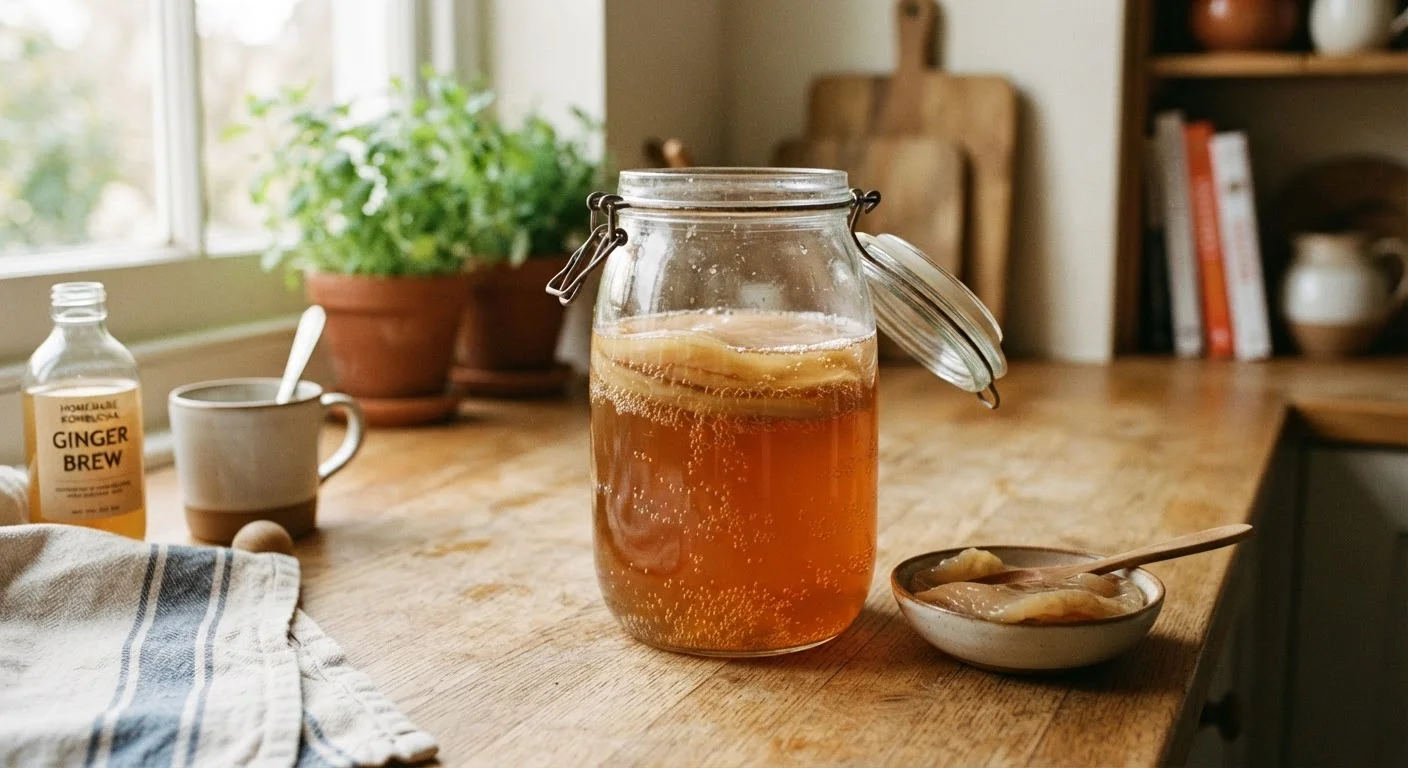
At its core, kombucha is fermented tea. The process begins with brewed black or green tea that is sweetened with regular sugar. A SCOBY - short for Symbiotic Culture of Bacteria and Yeast - is then added to the sweetened tea and left to ferment at room temperature, typically for one to four weeks.
During that time, the yeast breaks down sugar into alcohol and carbon dioxide (which creates the bubbles), and the bacteria convert much of that alcohol into organic acids like acetic acid and gluconic acid. Those acids give kombucha its characteristic tangy, slightly vinegary taste. At the end of fermentation, what's left is a fizzy, lightly sweet-tart beverage with a complex flavor profile that varies depending on the tea, the fermentation time, and any added ingredients like fruit or ginger.
The SCOBY itself looks like a rubbery, pale disc and is the living engine behind each batch. It can be reused repeatedly and grows with each brew cycle.
A Brief History of the Drink
Kombucha is not a modern trend - it has been consumed for well over a thousand years. Its origins are most commonly traced to northeastern China (then Manchuria) around 220 BCE, though it later spread through Russia and Eastern Europe, where home fermentation traditions kept it alive for generations. It arrived in the United States more gradually, gaining mainstream shelf space in the early 2000s as interest in fermented and probiotic-rich foods grew.
Today, kombucha is widely available in grocery stores, health food shops, and even some convenience stores, offered in dozens of flavors from plain to elaborate fruit-and-herb combinations.
Kombucha vs. Other Fermented Drinks
Kombucha is often grouped with other probiotic-rich beverages like kefir and water kefir, but they are distinct products. Kefir is dairy-based, water kefir uses water rather than tea, and kombucha is specifically tea-fermented. Each has a different bacterial and yeast profile, flavor, and nutritional composition. They're not interchangeable, so trying one doesn't tell you much about how another will taste or affect you.
What the Science Says About Health Benefits
Kombucha is often marketed with broad wellness claims - gut health support, energy boosts, immune function - but it's worth understanding what the current evidence actually shows.
Kombucha does contain probiotics (live microorganisms), B vitamins, and antioxidants, largely derived from the tea itself. Research into how these components interact in the body after drinking kombucha is still in early stages. Most studies to date have been conducted on animals or in laboratory settings, and large-scale human clinical trials are limited.
That doesn't mean kombucha is without value. As a low-sugar fermented beverage, it can be a reasonable alternative to soda for people looking to reduce sweetened drink consumption. But it's best understood as a flavorful fermented food - not a cure or supplement.
This article is for general informational purposes only and is not medical advice. Consult a qualified healthcare provider for guidance specific to your health needs.
$3.8B
U.S. kombucha market size (projected)
Market research firms have projected the U.S. kombucha market to reach several billion dollars in value, reflecting its rapid growth from a niche health food to a mainstream beverage category.
<0.5%
Alcohol content in commercial kombucha
Under U.S. federal guidelines, beverages with less than 0.5% alcohol by volume are classified as non-alcoholic; most commercially sold kombucha falls within this threshold.
2-8g
Typical sugar per 8 oz serving
Sugar content varies widely across brands and flavors; checking the nutrition label is the most reliable way to know what's in a specific product.
What to Know Before You Buy or Brew
If you're curious about trying kombucha, commercial versions sold refrigerated are your safest starting point. Look at the label for sugar content per serving and check whether the product is labeled as containing live cultures, since some pasteurized versions may have reduced probiotic activity.
For those interested in home brewing, the process is accessible but requires care. Cleanliness is critical - contamination with the wrong molds or bacteria can make home-brewed kombucha unsafe to consume. Reliable starter cultures and careful temperature control matter a great deal.
People who are pregnant, immunocompromised, or managing specific health conditions should speak with a healthcare professional before consuming kombucha regularly, whether commercial or homemade. The small amounts of caffeine and alcohol present may also be relevant depending on individual tolerance or medical history.