
Why Job Search Myths Are So Persistent
Bad job search advice spreads because it sounds logical on the surface. "One page keeps it tight." "Apply everywhere to maximize your chances." These rules feel like common sense until you understand how modern hiring actually works. Recruiters, hiring managers, and ATS software each play a different role in screening candidates - and the conventional wisdom often misreads all three.
The myths below aren't harmless. They cost real candidates real opportunities. Understanding what's actually true lets you redirect your energy toward strategies that produce results. For a broader look at how hiring works from the ground up, see our complete job search walkthrough.
Myth
Your resume must be exactly one page, no matter what.
Fact
Resume length should reflect your experience - two pages is appropriate for most mid-career and senior professionals.
The one-page rule originated decades ago when fax machines and physical paper made brevity a practical necessity. Today, most recruiters review resumes digitally and can scroll. What they actually want is relevant information presented clearly. For candidates with fewer than five years of experience, one page is often the right call. For everyone else, forcing a two-page career into one page typically means cutting accomplishments that could clinch an interview. The goal is concise and complete, not arbitrarily short. See our guide on tailoring your resume to each role for formatting guidance that actually serves you.
Myth
Applying to as many jobs as possible gives you the best odds.
Fact
High-volume, untailored applications typically yield fewer responses, not more.
Spray-and-pray job searching feels productive, but hiring managers recognize a generic application immediately - and so does ATS software, which scores resumes against specific job descriptions. A targeted application with a customized resume and a clear connection to the role consistently outperforms a bulk approach. Time spent on ten thoughtful applications generally produces better results than fifty generic ones. Our full breakdown of why applying to hundreds of jobs rarely works explains the mechanics in detail.
Myth
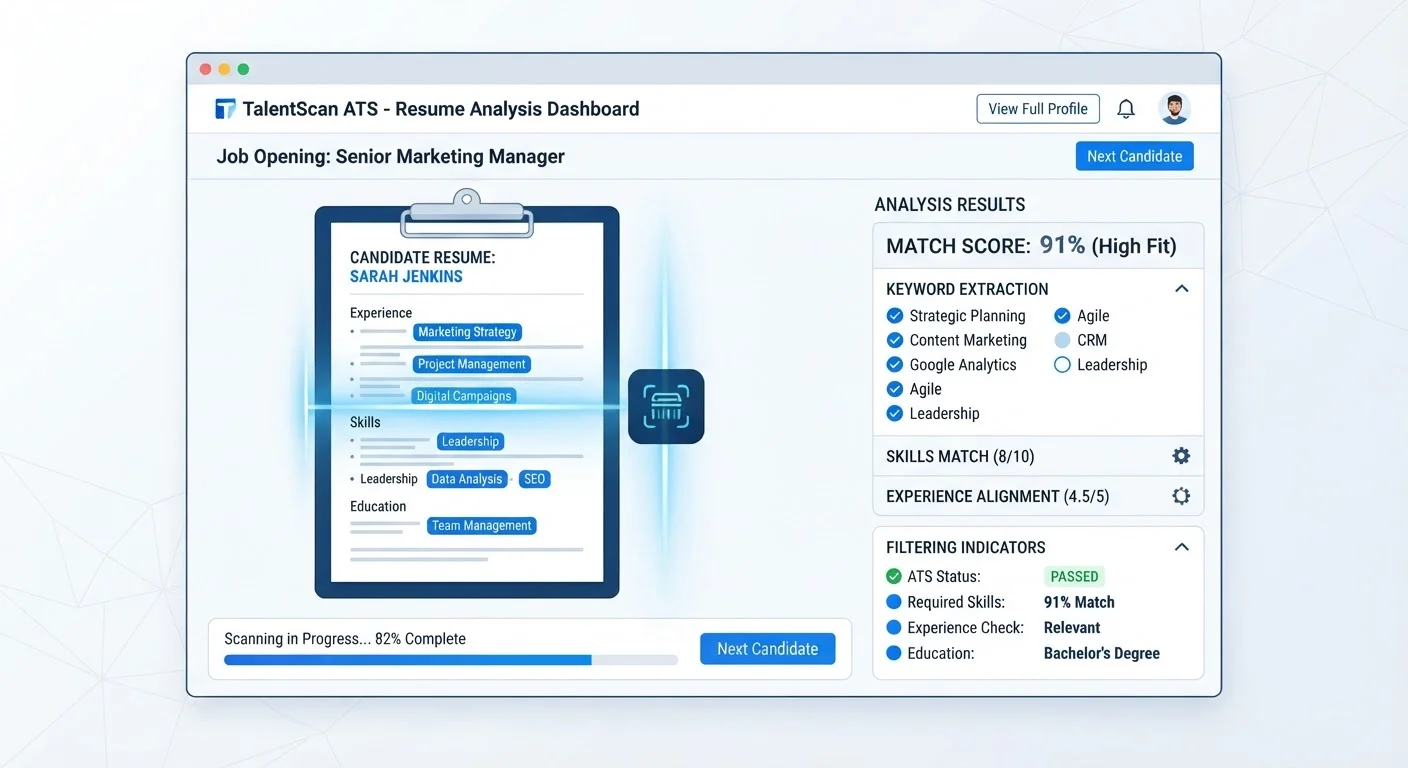
ATS software automatically rejects resumes that don't match keywords perfectly.
Fact
ATS systems rank and filter resumes, but keyword-stuffing can hurt as much as help.
ATS tools do score resumes based on how well they match job description language - but they are more sophisticated than simple keyword counters, and a human recruiter almost always reviews the shortlist. Stuffing your resume with repeated keywords or using white text tricks can flag your application as manipulative and disqualify you entirely. The practical takeaway: mirror relevant language from the job posting naturally within your actual experience descriptions. Our explainer on how ATS systems screen resumes covers exactly how these tools work.
Myth
If a job isn't posted, there's no point reaching out to a company.
Fact
A significant share of positions are filled before they're publicly advertised - proactive outreach and networking matter.
Many roles are filled through internal referrals, recruiter outreach, or direct contact before a formal posting appears - or without one ever being published. Waiting exclusively for public listings means competing in the most crowded part of the market. Building relationships through informational interviews and professional networking creates access to opportunities that never hit job boards. Our article on informational interviews explains how these low-pressure conversations can open genuine doors.
Myth
Following up after submitting an application looks desperate.
Fact
A professional, brief follow-up is generally acceptable and can demonstrate genuine interest.
Recruiters are managing large pipelines and appreciate candidates who are organized and genuinely interested - as long as outreach is professional and not excessive. A single follow-up email sent five to seven business days after applying, or after an interview, is widely considered appropriate. What reads as desperate: multiple messages in quick succession, contacting hiring managers who haven't responded through multiple channels, or framing the follow-up around your needs rather than the role.
Myth
You should accept any job offer quickly to avoid losing it.
Fact
It is standard practice to request a short window to review an offer before accepting.
Most employers expect candidates to take one to three business days to review a written offer before responding. Using that time to evaluate compensation, benefits, growth potential, and fit is not rude - it is professional. Negotiating salary at this stage is also common and rarely causes an offer to be rescinded when done respectfully. Accepting a poor fit out of anxiety about losing the offer often leads to a short tenure and another job search sooner than expected. For understanding the terminology in any offer you receive, our plain-language job search glossary is a useful reference.
What a Smarter Job Search Actually Looks Like
Once you shed the myths, a clearer picture emerges: effective job searching is deliberate, not high-volume. It means tailoring materials to specific roles, activating your network before a posting even goes live, and following up professionally after you apply.
That doesn't mean ignoring job boards - it means using them as one tool rather than your entire strategy. As our piece on job boards vs. networking explains, both channels have genuine value, but most people over-index on passive applications and under-invest in relationships.
Sustained searching also takes a toll. If you've been at it for weeks or months, structure and realistic daily goals matter as much as tactics. Our guide on building a job search routine covers how to keep momentum without burning out.
70%-80%
Jobs filled through networking
Multiple workforce surveys and career research organizations estimate that the majority of positions are filled through professional connections rather than public job postings.
75%
Resumes filtered before human review
Research from recruiting technology analysts suggests that roughly three in four resumes are screened by ATS before a recruiter ever reads them.