The Same Story, Two Very Different Journeys
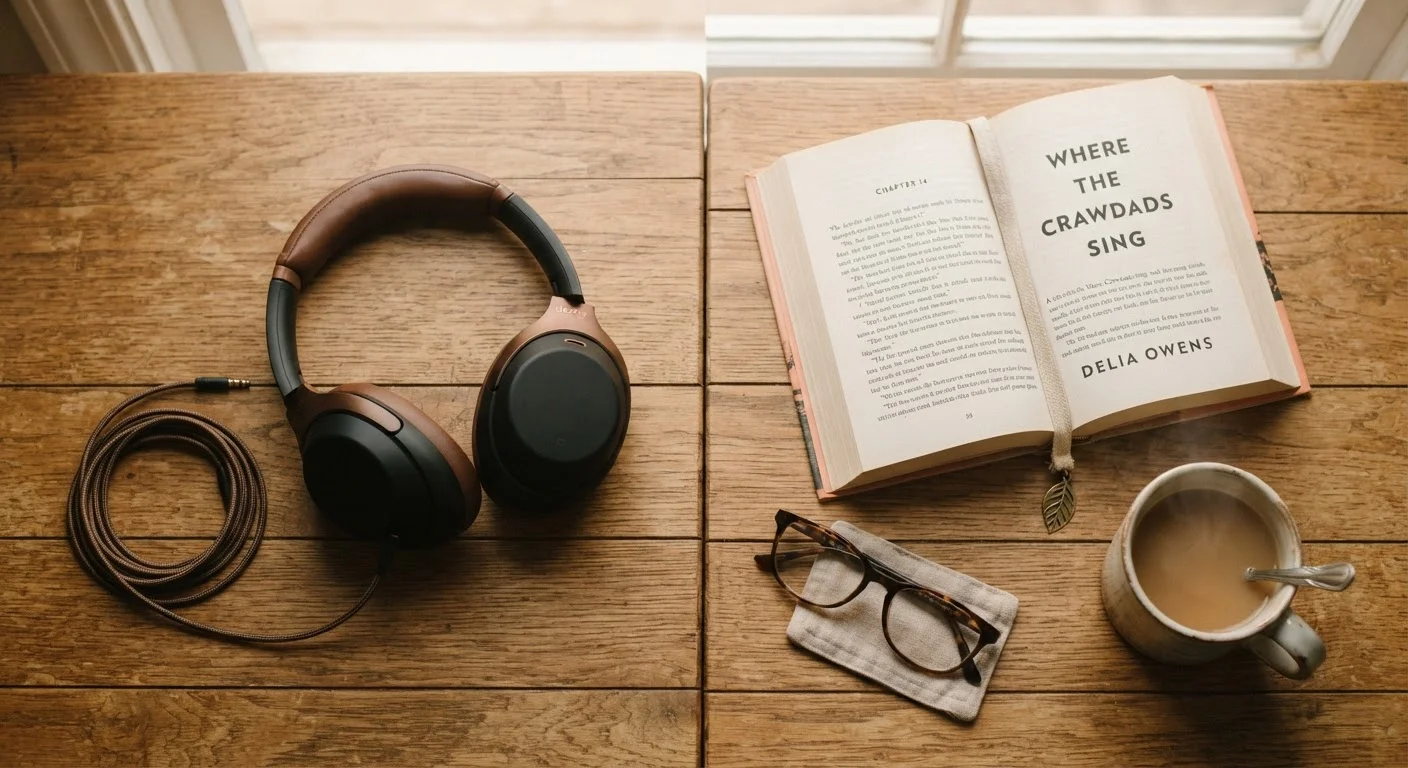
Pick up a novel in print and you navigate it with your eyes, controlling the pace word by word. Listen to the same novel and a narrator's voice takes the wheel - shaping tone, pacing, and even character personality on your behalf. Both experiences land you at the same destination, but the roads feel remarkably different.
This isn't merely a matter of personal taste. Researchers, educators, and passionate readers have spent years examining what actually changes - cognitively and emotionally - when we shift formats. The findings are nuanced and worth knowing before you default to whichever format is most convenient. As part of the broader conversation about how formats shape a reading life, the audiobook-versus-print debate deserves its own careful look.
Comprehension and Retention: What the Research Suggests
Studies on reading comprehension have generally found that print readers demonstrate stronger retention of complex, detail-heavy material - particularly in nonfiction. One widely cited reason is metacognitive regulation: when reading in print, people are more aware of when they've lost the thread, and they re-read. Audio offers no such natural pause; a listener who zones out for thirty seconds may miss a critical argument without realizing it.
That said, research also shows that for narrative fiction - especially stories driven by plot and character - comprehension differences between formats shrink considerably. When the material is engaging and linear, most readers absorb it well regardless of how it's delivered.
| Criterion | Audiobooks | Print Books |
|---|---|---|
| Comprehension (complex nonfiction) | Can lag without re-listen | Stronger; easy to re-read |
| Comprehension (narrative fiction) | Comparable to print | Comparable to audio |
| Accessibility | High - suits dyslexia, visual impairment | Lower for print-processing challenges |
| Multitasking potential | Excellent - hands and eyes free | Requires dedicated attention |
| Annotation and review | Difficult; requires separate notes | Easy - margins, bookmarks, highlights |
| Narrator/presentation effect | Can enrich or limit enjoyment | Reader controls all interpretation |
| Technology dependence | Requires device and often subscription | None; always available |
| Best genre fit | Narrative fiction, memoir, humor | Poetry, dense nonfiction, reference |
It's also worth noting that listening speed matters. Streaming services often let users push audiobook playback to 1.5x or 2x speed. While this feels efficient, some cognitive scientists suggest that very high speeds can reduce the depth of processing - a nuance worth keeping in mind for dense reading. See common reading myths for more on why speed and comprehension don't always scale together.
Accessibility, Convenience, and Who Each Format Serves
One of the most compelling cases for audiobooks isn't efficiency - it's inclusion. For readers with visual impairments, dyslexia, or other print-processing challenges, audio isn't a shortcut; it's often the only practical door into a book. That matters enormously when we talk about who gets to participate in reading culture.
Beyond accessibility, audiobooks serve the time-scarce reader in ways print simply cannot. A morning commute, a long run, a sink full of dishes - these are hours that print can't reach. For many people, audiobooks are the only reason they finish any books at all, and that's a genuine win for reading culture broadly.
74%
Audiobook listeners who also read print
According to the Audio Publishers Association's annual survey, the majority of audiobook listeners in the U.S. consume both formats rather than exclusively one.
67,000+
Audiobook titles released annually in the U.S.
The Audio Publishers Association reports that new audiobook production has grown dramatically over the past decade, reflecting rising mainstream demand.
Print, on the other hand, offers its own friction-free advantages: no battery required, easy to flip back, and no account or device needed. A paperback slipped into a bag is always ready. For building the kind of sustainable reading habit that survives busy seasons, the low-tech simplicity of print is genuinely underrated.
When Format Shapes the Book Itself
Perhaps the most surprising thing about this comparison is that format can change how a book feels - not just how efficiently you absorb it. A skilled audiobook narrator doesn't just read words; they perform them. Vocal choices around pacing, accent, and emotion can deepen a reader's connection to characters in ways the printed page can't replicate.
Conversely, some books are simply built for the eye. Poetry, for instance, depends on line breaks, white space, and visual rhythm - elements that audio flattens. Dense philosophical arguments that benefit from margin notes and dog-eared pages lose something when heard only once in real time. If you're exploring unfamiliar book genres, the format you choose may genuinely affect whether a genre clicks for you the first time.
Many experienced readers find that reading multiple books simultaneously works especially well with a mixed format approach - listening to lighter fiction while reading denser nonfiction in print. Rather than treating the two as competitors, think of them as tools with different strengths, each suited to a different kind of reading moment.