
A Literary History That Predates the Printing Press
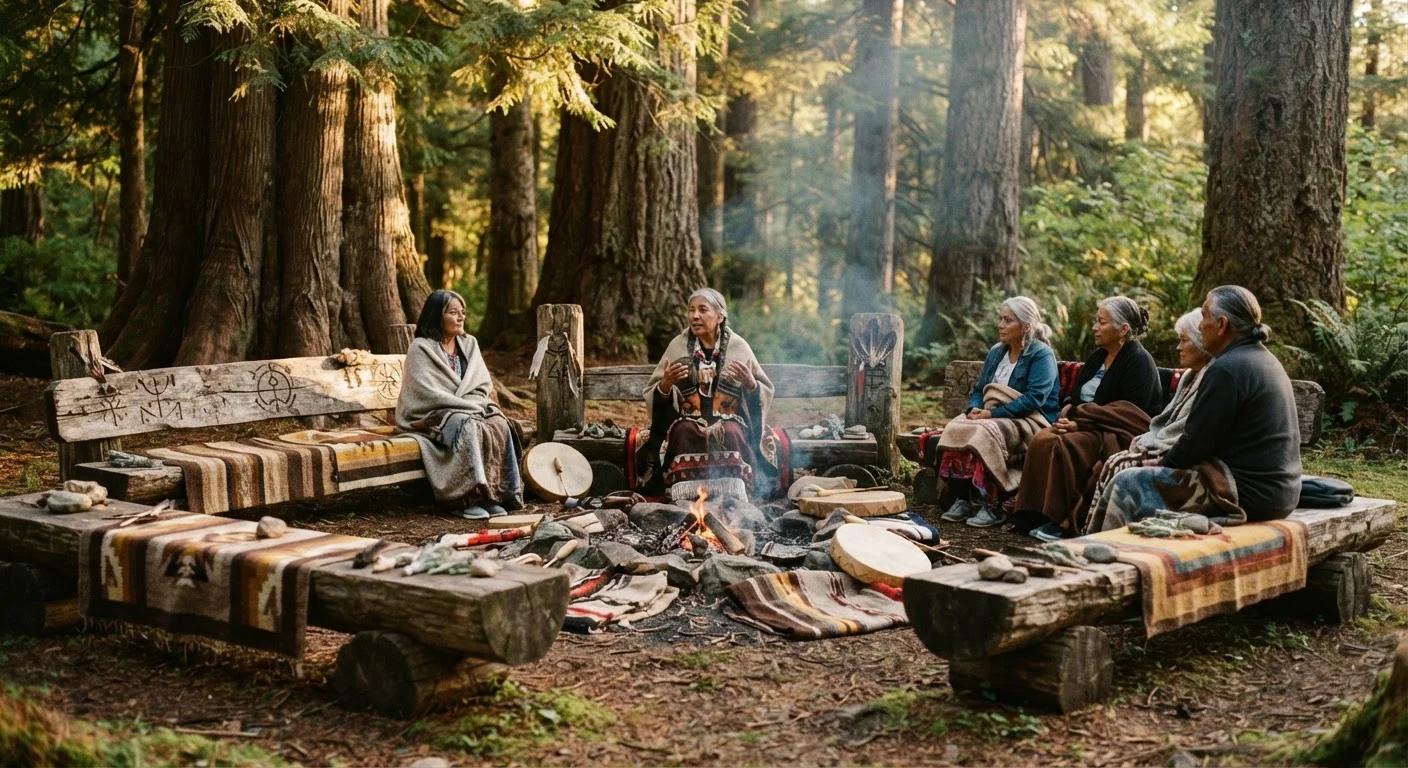
When most Americans picture the origins of their nation's literature, they reach for names like Hawthorne, Emerson, or Whitman. But the storytelling traditions of Indigenous peoples across North America stretch back thousands of years before any of those writers ever set pen to paper. These traditions - oral, ceremonial, and communal in nature - form a foundational layer of American literary culture that mainstream education has often minimized or skipped altogether.
Indigenous oral traditions are not simply informal tales passed between campfires. They are sophisticated systems of knowledge transmission, encoding history, ecology, law, and cosmology into narrative forms that can adapt across generations without losing their core meaning. As scholar Vine Deloria Jr. argued, Indigenous oral accounts often preserve accurate records of geological and astronomical events, suggesting a depth of intellectual rigor that rivals any written archive.
Understanding this history matters for any reader who wants a fuller picture of American literature. As oral and written traditions compare as cultural memory systems, it becomes clear that neither form holds a monopoly on complexity or durability.
| Estimated Indigenous Nations in North America | Over 570 federally recognized tribes in the U.S. alone (Bureau of Indian Affairs) |
| First Indigenous Pulitzer Prize in Fiction | N. Scott Momaday, House Made of Dawn (1969) (Pulitzer Prize records) |
| First U.S. Poet Laureate of Indigenous Heritage | Joy Harjo (Muscogee Nation), appointed 2019 (Library of Congress) |
| Recognized Indigenous Languages in the U.S. | Approximately 150 still spoken (National Congress of American Indians) |
| Academic Field | Native American and Indigenous Studies (NAIS) now offered at over 100 U.S. universities (Native American and Indigenous Studies Association (NAISA)) |
Key Terms and Concepts in Indigenous Literary Study
Approaching Indigenous storytelling thoughtfully means understanding a few foundational ideas that differ significantly from Western literary frameworks. The glossary below covers the most important terms readers are likely to encounter when exploring this field.
Oral Tradition
The practice of transmitting stories, histories, laws, and cultural knowledge through spoken word across generations. In many Indigenous communities, oral tradition carries the same authority as written records and is governed by protocols about who may share which stories.
Native American Renaissance
A term used by scholars to describe the surge of published Indigenous literature in the United States beginning roughly in the late 1960s. N. Scott Momaday's Pulitzer-winning novel is commonly cited as a catalyst for this period.
Narrative Sovereignty
The principle that Indigenous communities have the right to control, interpret, and share their own stories on their own terms. It challenges outside scholars and publishers from extracting or reframing Indigenous narratives without community consent.
Cosmology
A culture's foundational understanding of how the universe is ordered, including the origins of people, land, time, and the relationships among living things. Indigenous cosmologies are often encoded directly within traditional stories.
Tribal Sovereignty
The recognized authority of Indigenous nations to govern themselves, maintain distinct cultures, and make decisions about their lands and communities. This political concept intersects closely with debates about cultural and narrative autonomy.
Cultural Appropriation
The adoption or use of elements from one culture - including stories, symbols, or spiritual practices - by members of another, typically more dominant, culture, often without permission or understanding of their original context.
One concept worth emphasizing is sovereignty - not just political sovereignty, but cultural and narrative sovereignty. Many Indigenous scholars and writers argue that communities have the right to control how their stories are shared, interpreted, and published. This principle has shaped debates around cultural appropriation in publishing and continues to influence how contemporary Indigenous authors approach their craft.
From Oral Roots to Published Pages
The 20th century saw a dramatic expansion of Indigenous voices in American published literature. The 1969 publication of N. Scott Momaday's House Made of Dawn - which won the Pulitzer Prize for Fiction - is widely credited with opening a path for what scholars call the Native American Renaissance. Writers like Leslie Marmon Silko, Louise Erdrich, Joy Harjo, and Sherman Alexie followed, each weaving oral storytelling structures, tribal histories, and contemporary Indigenous experience into their work.
What makes much of this literature distinctive is its structural approach. Rather than following a linear Western plot arc - setup, conflict, resolution - many Indigenous narratives move in cycles, spirals, or layered simultaneity, reflecting worldviews in which time and causality operate differently. Narrative structure itself reflects cultural worldview, and Indigenous literature offers some of the clearest examples of that principle in action.
These works have also carried real-world weight. Some have informed legal arguments around treaty rights and land stewardship - a reminder, explored in discussions of fiction that has shifted policy, that storytelling is never merely decorative.
Why This Tradition Deserves a Central Place in American Reading
Indigenous literature is sometimes shelved under "multicultural" or "special interest" categories - a classification that inadvertently suggests it's supplementary to American literary history rather than central to it. That framing deserves a rethink. The stories, structures, and values carried through Indigenous traditions have influenced American nature writing, regional fiction, environmental literature, and political narrative in ways that are only beginning to receive serious scholarly attention.
For readers accustomed to classic versus contemporary fiction debates, Indigenous literature offers a third dimension: works that may be both ancient in origin and urgently contemporary in theme. Erdrich's novels, for instance, navigate federal Indian law, family memory, and Ojibwe spiritual tradition simultaneously - a complexity that defies simple genre classification.
Approaching this body of work with curiosity and respect - seeking out texts recommended by Indigenous scholars and publishers - is one of the more rewarding expansions a reader can make to their literary life.