Why Megapixels Became the Default Selling Point
Camera specs on a smartphone box are designed to be easy to compare at a glance. Megapixel counts are a single number - bigger looks better. That simplicity made them a popular marketing shorthand. But professional photographers and camera engineers will tell you that resolution is just one dimension of image quality, and often not the most important one.
Just as RAM and processor specs require more context than raw numbers suggest, so do camera specs. Understanding a few core concepts lets you look past the headline figure.
Sensor Size: The Single Biggest Factor
The image sensor is the hardware component that actually captures light. Think of it like film in a traditional camera. A larger sensor has more surface area to gather light, which generally produces photos with richer color, better contrast, and less visual noise - that grainy, speckled look common in dark environments.
Smartphone sensors are measured in fractions of an inch, which can be confusing: a sensor labeled 1/1.28" is physically larger than one labeled 1/2.55". Larger sensors also tend to produce a more natural depth of field - the background-blur effect often associated with professional photography.
1/1.28"
Example of a large smartphone sensor size
Sensor size notation can be confusing - a smaller denominator indicates a physically larger sensor, which generally captures more light.
f/1.6
Wide aperture found on some flagship phones
Lower f-numbers indicate wider lens openings, allowing significantly more light in than apertures like f/2.4 common in budget devices.
3-5x
Typical optical zoom range on multi-lens phones
Optical zoom beyond this range is uncommon in most smartphones; anything higher typically relies on digital (software-based) zoom.
Aperture: How Much Light Gets In
Aperture is the adjustable opening inside the lens. It is expressed as an f-number: f/1.6, f/1.8, f/2.4, and so on. The counterintuitive part is that a lower f-number means a wider opening. A wider opening lets in more light, which is critical for low-light and indoor photography.
A lens with an aperture of f/1.6 will perform noticeably better in a dim restaurant than one at f/2.8, all else being equal. On smartphones, the aperture is fixed rather than adjustable like on a DSLR camera, so the spec listed applies across all shooting conditions.
Optical Zoom vs. Digital Zoom
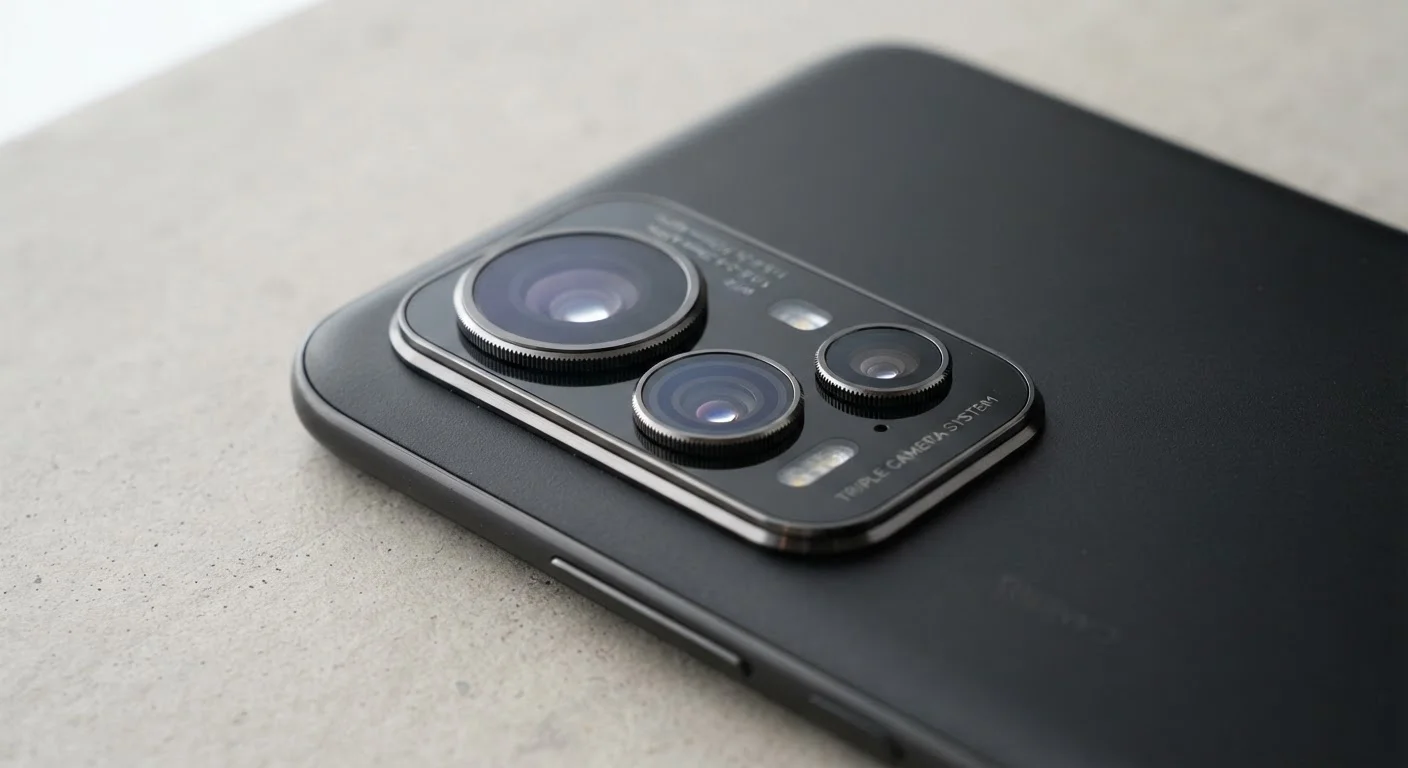
Many current smartphones include multiple camera lenses - a wide, ultrawide, and telephoto. Optical zoom happens when a dedicated telephoto lens physically brings a distant subject closer, maintaining full image quality. Digital zoom, by contrast, is software-based cropping of the existing image. It can make a photo look soft or blocky, especially when zoomed in far.
When a phone advertises "up to 100x zoom," most of that range beyond a certain point is digital. Optical zoom range - say, 3x or 5x - is generally the more meaningful figure for image quality.
Check for Optical Zoom Before Buying
When reviewing specs, look specifically for 'optical zoom' rather than just 'zoom.' If only a maximum zoom multiplier is listed without specifying optical range, most of that zoom is digital. For photography where distant subjects matter - wildlife, sports, travel - optical zoom range is a meaningful differentiator.
Software and Computational Photography
Modern smartphones run sophisticated image-processing algorithms the instant you press the shutter. Features like Night Mode stack multiple rapid exposures to brighten dark scenes without flash. HDR (High Dynamic Range) merges differently exposed frames to preserve both bright highlights and shadow detail. Portrait Mode estimates depth to blur the background artificially.
This software layer means two phones with nearly identical hardware can produce visibly different photos. It also explains why camera performance can improve through software updates even after you've bought the phone.
As common smartphone myths often reveal, what you see in marketing rarely tells the full story about how a device performs in practice. Camera specs are a prime example.
Reading Camera Specs More Practically
When evaluating a phone's camera, consider the following together rather than any single figure:
- Sensor size - larger generally means better low-light performance
- Aperture - lower f-number lets in more light
- Optical zoom range - more relevant than digital zoom reach
- Megapixels - useful mainly if you regularly print large photos or crop heavily
- Video resolution and stabilization - if video matters to you, look beyond still-photo specs
Real-world sample photos under varied conditions tell you more than any spec sheet. Published camera tests from independent reviewers, which evaluate the same scenes across different phones, are often the most reliable resource for understanding practical performance.
This article is for general informational purposes only and does not constitute professional purchasing or technical advice.