What Book Banning Actually Tells Us
When a government, institution, or community moves to ban a book, the act is rarely just about the words on the page. It is a declaration - about power, about who gets to define acceptable thought, and about what a society most fears its citizens might believe after reading. Banned books are, in this sense, a kind of negative portrait: a record of every idea that made those in authority uncomfortable enough to act.
The history stretches back further than most readers realize. The Roman Catholic Church's Index Librorum Prohibitorum - a list of prohibited texts first published in 1559 - remained in use until 1966, cataloguing works by Galileo, Voltaire, and John Locke, among hundreds of others. In each case, the prohibition signaled not just theological concern but political anxiety about ideas that could erode institutional authority.
Understanding this history is essential context for contemporary debates. As our guide to the Western literary canon explores, the questions of who controls what gets read - and who gets silenced - have never been settled.
| Oldest known large-scale book burning | 213 BCE, under Emperor Qin Shi Huang in China |
| Years the Catholic Church's prohibited book list was active | 1559-1966 (407 years) |
| U.S. legal milestone for literary obscenity | 1933 federal ruling allowing import of James Joyce's Ulysses |
| ALA tracking body for U.S. book challenges | Office for Intellectual Freedom (OIF) (American Library Association) |
| UK publishing freedom landmark | 1960 Penguin Books trial over Lady Chatterley's Lover |
| Soviet censorship body | Glavlit, operational from 1922 through the late Soviet era |
Landmark Cases Across Cultures and Eras
No single region or era has a monopoly on censorship. The motivations shift - religious orthodoxy, political control, racial hierarchy, moral panic - but the mechanism repeats.
- China's Book Burning (213 BCE): Emperor Qin Shi Huang ordered the destruction of texts that promoted competing schools of thought, particularly Confucian works. Scholars who refused to comply reportedly faced execution. It remains one of history's most documented episodes of state-sponsored intellectual suppression.
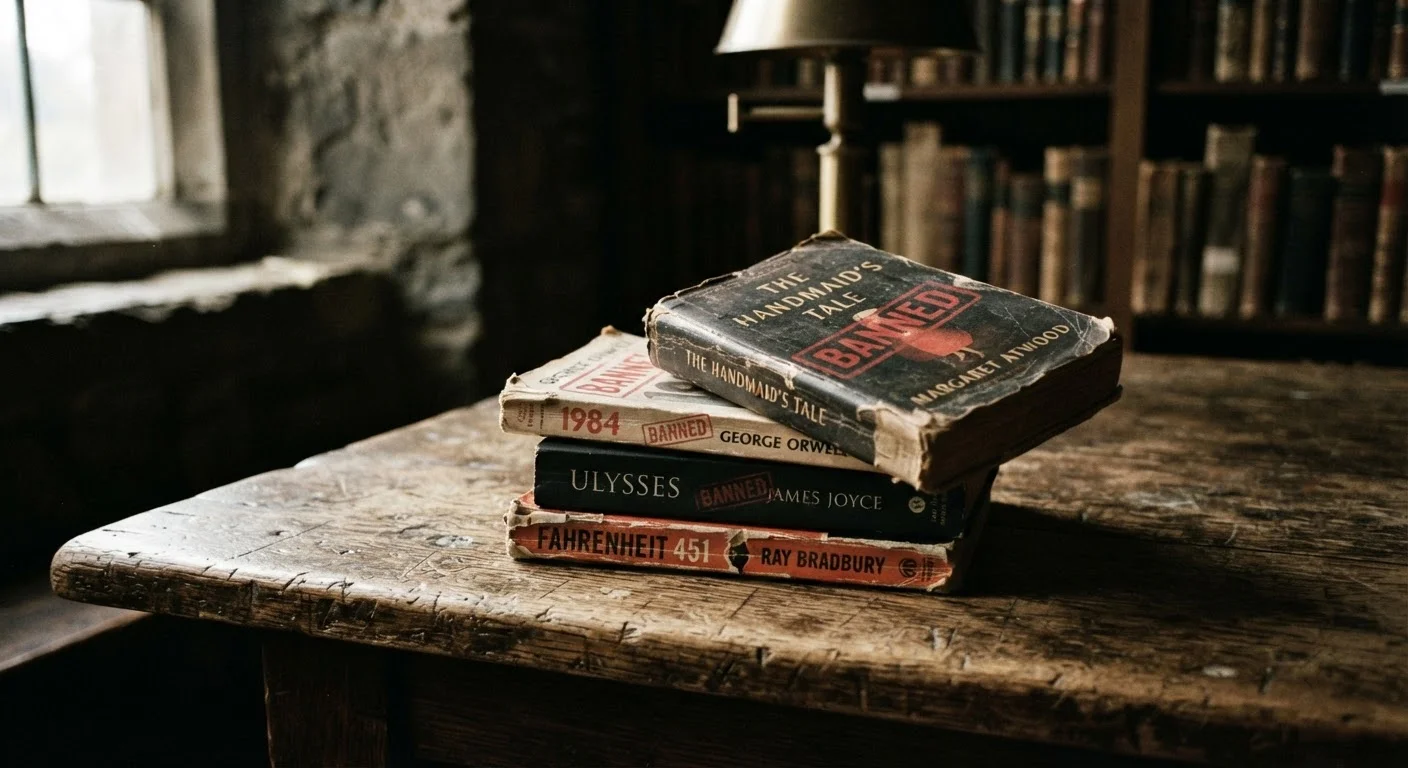
- Ulysses by James Joyce (1922-1933): Serialized in an American literary magazine before publication, Joyce's novel was declared obscene by U.S. postal authorities. It was banned from import into the United States until a landmark 1933 federal court ruling by Judge John M. Woolsey determined the book was not pornographic - a decision that reshaped American obscenity law.
- Lady Chatterley's Lover by D.H. Lawrence (1928): Lawrence's novel was banned in Britain and the United States for decades. The 1960 obscenity trial in the UK - in which Penguin Books successfully defended its right to publish - is widely considered a turning point for literary freedom in the English-speaking world.
- The Diary of a Young Girl by Anne Frank: Anne Frank's wartime diary has been challenged in American school districts multiple times, primarily over frank passages about puberty and sexuality - a striking contrast to the historical horror the book documents.
- Soviet Union's Censorship Apparatus: The USSR maintained a state censorship body, Glavlit, from 1922 until the late Soviet era. Works by Boris Pasternak and Mikhail Bulgakov circulated only in secret handwritten or typed copies called samizdat, an act of literary resistance that itself became culturally significant.
Some banned books didn't just survive censorship - they helped change the laws around them. For a deeper look at literature's documented impact on policy, see Fiction That Changed Laws.
Book Challenges in the Contemporary United States
Book banning is not a relic. The American Library Association (ALA) tracks formal challenges to library and school materials each year, and recorded numbers have risen sharply in recent years. Contemporary challenges often target books dealing with race, LGBTQ+ identities, and sexual content - mirroring the cultural anxieties of each moment just as historical bans did.
Among the most frequently challenged recent titles are works like Gender Queer by Maia Kobabe, All Boys Aren't Blue by George M. Johnson, and The Hate U Give by Angie Thomas. The grounds cited range from explicit content to accusations that the books promote ideologies parents or school boards find objectionable.
It is worth noting the distinction between a challenge (a formal request to remove material) and a ban (a successful removal). Many challenges fail. But even unsuccessful challenges can suppress access: a book under review may be quietly pulled from shelves while a decision is pending.
Book challenge
A formal request, usually submitted to a school board or library, to restrict or remove a specific title from a collection. A challenge does not automatically result in removal.
Censorship
The suppression or prohibition of speech, writing, or other expression by an authority - typically a government or institution - on the grounds that it is considered harmful, offensive, or politically inconvenient.
Samizdat
A Russian term meaning 'self-published.' It refers to the clandestine copying and distribution of literature banned by the Soviet state, often typed or handwritten and passed person to person.
Index Librorum Prohibitorum
A list of publications the Roman Catholic Church prohibited its members from reading, first issued in 1559 and maintained until 1966. It included scientific, philosophical, and literary works deemed contrary to Church doctrine.
Obscenity law
Legal standards used to determine whether a work is so offensive or sexually explicit that it falls outside First Amendment protection in the United States. The definition has shifted substantially through landmark court rulings over the twentieth century.
For readers curious about the broader landscape of literary categories and how controversial works fit within them, our guide to book genres offers useful context.